
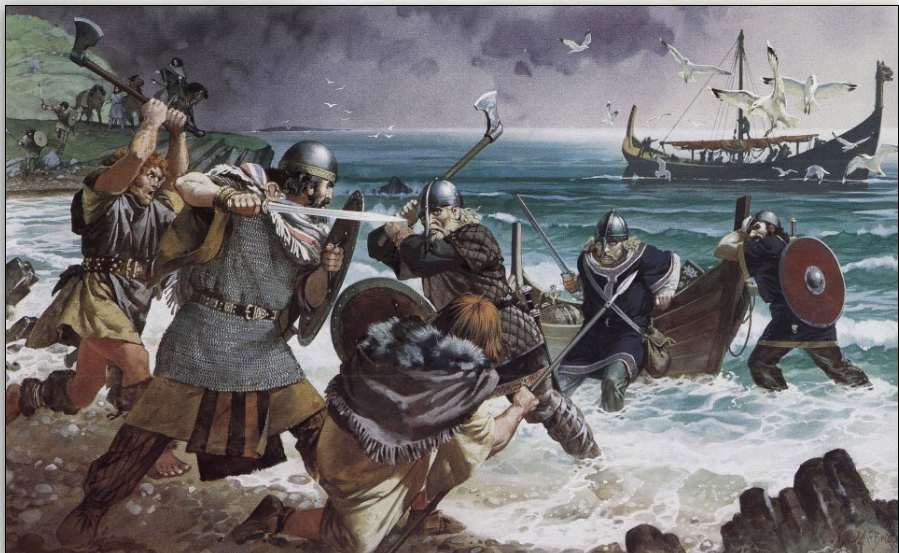
On 23 April 1014 — Good Friday — the fields of Clontarf ran red with blood in one of the most decisive and brutal battles in Irish history. The Battle of Clontarf is still remembered as a turning point that broke Viking power in Ireland forever. But what really happened that day? Who fought in the Battle of Clontarf? Why did the Battle of Clontarf happen? And how many people died in the Battle of Clontarf?
From the secret coastal paths where the armies clashed to the modern suburb that now stands on the battlefield, this is the real story — the one big guidebooks often gloss over.
Why Did the Battle of Clontarf Happen?
By 1014, High King Brian Boru had united much of Ireland under his rule. He demanded tribute and hostages from the rebellious Kingdom of Leinster and the powerful Hiberno-Norse kingdom of Dublin. Leinster’s king, Máel Mórda, refused and formed a dangerous alliance with Dublin’s Viking ruler Sigtrygg Silkbeard. They called in reinforcements from Orkney, the Isle of Man, and beyond. The stage was set for a final showdown over control of Ireland.
Who Fought in the Battle of Clontarf?
The two sides were evenly matched at around 6,000–7,000 warriors each:
- Irish forces (Brian Boru’s army): Munster warriors, Connacht allies, Meath troops under Máel Sechnaill, and some Danish Vikings.
- Viking & Leinster alliance: Dublin Norse under Sigtrygg Silkbeard, Leinster men led by Máel Mórda, plus elite fighters from Orkney (Earl Sigurd) and the Isle of Man (Brodir).
Brian Boru, then in his early 70s, prayed in his tent while his son Murchad and grandson led the fighting.
Battle of Clontarf Summary – What Happened on 23 April 1014
The battle began at sunrise and raged all day along the coastal plain north of Dublin. It was ferocious hand-to-hand combat. The tide trapped many Vikings against the sea, leading to heavy drownings. Brian’s forces won a decisive victory, but at a terrible cost: Brian himself was slain in his tent by Brodir of Man.
How Many People Died in the Battle of Clontarf?
Contemporary annals and modern historians estimate between 7,000 and 10,000 men were killed — an extraordinarily high number for the time. Irish losses were around 4,000; the Viking and Leinster side lost roughly 6,000. It remains one of the bloodiest single-day battles in medieval Irish history.
Who Won the Battle of Clontarf?
Brian Boru’s Irish forces won the Battle of Clontarf. Although Brian was killed, the coalition of Leinster and Vikings was shattered. Viking dominance in Ireland was effectively ended, and major raids largely stopped.
What Happened to the Vikings After the Battle of Clontarf?
The power of the Norse in Ireland was broken. Many survivors integrated into Irish society through marriage and trade. Dublin remained an important trading town, but it was now firmly under Gaelic influence. Sigtrygg Silkbeard survived and continued ruling Dublin until 1042, but the era of Viking conquest in Ireland was over.
Where Is the Battle of Clontarf Today? (Battle of Clontarf Map & Modern Site)
The battlefield is now part of the leafy Dublin suburb of Clontarf. The main fighting took place around what is today St Anne’s Park and the Clontarf promenade. You can walk the exact coastal paths where warriors once clashed — a perfect “secret Ireland” spot for history lovers. A modern Battle of Clontarf 10 Mile Road Race is held every August in the same area, keeping the name alive in a very different way.
Tip: Visit on a quiet morning and you’ll still feel the weight of history on the seafront.
Battle of Clontarf Movie – Why Hasn’t Hollywood Made One Yet?
The epic story of the Battle of Clontarf has inspired countless documentaries and books, yet it still waits for its big-screen moment. Many historians and film fans agree it would make an incredible Battle of Clontarf movie — think Braveheart meets Vikings, but with real Irish heroes and a tragic twist.
FAQ – Quick Answers About the Battle of Clontarf
What happened at the Battle of Clontarf?
On 23 April 1014, Brian Boru’s Irish army defeated a Viking-Leinster alliance at Clontarf near Dublin in a day-long bloody battle that ended Viking dominance in Ireland.
What happened to the Vikings after the Battle of Clontarf?
Their military power in Ireland was broken. Many integrated into Irish society, and large-scale Viking raids effectively ended.
Where is the Battle of Clontarf today?
The battlefield is now the Dublin suburb of Clontarf, centred around St Anne’s Park and the coastal promenade overlooking Dublin Bay.
Who was the Irish king who defeated the Vikings?
High King Brian Boru (also known as Brian Boruma). His forces won the battle, though he was killed during the fighting.
What was the bloodiest Battle in Irish history?
The Battle of Aughrim (1691) is generally considered the bloodiest single day in Irish history with around 7,000 dead. The Battle of Clontarf ranks among the bloodiest medieval battles.
What age did Viking girls marry?
Viking girls typically married between the ages of 12 and 15. Marriages were often arranged by families, although women usually had some say in the choice.
Final Thoughts – Why the Battle of Clontarf Still Matters in 2026
More than a thousand years later, the Battle of Clontarf remains a powerful symbol of Irish resilience. It’s a story of sacrifice, strategy, and the end of one era and the beginning of another. Next time you’re in Dublin, take the short walk along the Clontarf seafront — you’re literally standing on secret Irish history.
Have you visited the battlefield or run the Battle of Clontarf 10? Drop your thoughts in the comments below. And if you enjoyed this deep dive, explore more hidden Irish history and folklore right here on SecretIreland.ie.
Written by Seamus Hanratty • Last updated April 2026 • SecretIreland.ie
About the Author
