
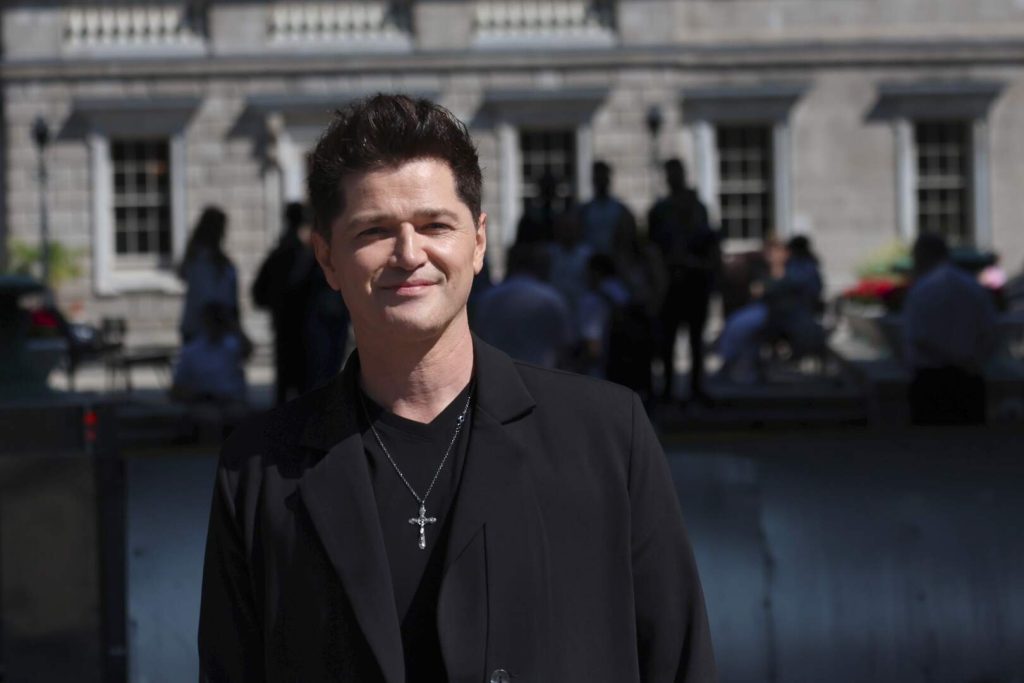
Led by high-profile figures including The Script’s frontman Danny O’Donoghue, musicians gathered at Leinster House to back a critical legislative motion designed to defend intellectual property in the age of generative AI music tools. The political maneuver aims to establish strict regulatory guardrails around commercial platforms that synthesize highly convincing, royalty-free audio files.
The Rise of Algorithmic Soundalikes and Industrial Scraping
Advanced deep learning music generators, such as Suno and Udio, allow users to bypass traditional instrument tracking and vocal recordings entirely. By inserting basic descriptive keywords—such as specific genre tags, vocal timbres, or references to iconic bands—these applications quickly produce complex multi-instrumental tracks. While the results frequently display an overproduced, sterile quality, they remain disturbingly plausible to the casual consumer.
Data compiled by specialized digital tracking tools like the US-based AI Watchdog indicates that intellectual property theft has scaled up significantly. This comprehensive monitoring reveals extensive uncredited usage across major Irish diskographies:
- The Script: Forensic data verified that at least 125 tracks written and performed by the band have been pulled into five separate commercial training datasets without consent.
- Something Happens: Up to 46 original arrangements from the Dublin rock outfit—including hit singles “Parachute” and “Forget Georgia”—show up directly within automated machine-learning logs.
“The established artists are being attacked because copyright is being infringed on an industrial scale… The amount of people who are actually involved in one of our songs alone can be anywhere between 20 and 30 people… and all of their livelihoods are being hit.”
— Danny O’Donoghue, The Script
Market Saturation and Streaming Platform Dilution
The rapid adoption of AI music software poses an existential threat to indie distribution models and emerging independent artists. Major audio streaming platforms are being systematically flooded with automated content, fundamentally altering search discoverability indexes and diluting digital royalty payouts.
| Metric Tracker | Estimated Volume / Valuation | Industry Implications |
|---|---|---|
| Daily Spotify Uploads | 100,000 total new tracks | Extreme marketplace saturation; severe discovery hurdles for real bands. |
| AI-Generated Track Volume | 30,000 to 50,000 tracks per day | Algorithmic audio accounts for 30% to 50% of daily global streaming additions. |
| Suno User Metrics | 100 million total users / 2 million paid subscribers | Commercial valuation exceeds $5 billion, driven by massive venture capital backing. |
Musician and veteran Newstalk broadcaster Tom Dunne warns that algorithmic generation makes it increasingly difficult for original human art to cut through online noise. Dunne recounted instances where consumers were entirely unable to distinguish artificial tracks from genuine releases, noting that corporate audio recognition algorithms like Shazam frequently fail to map these unindexed synthetic patterns.
Royalty-Free Slop Replacing Live Music Licensing
The financial impact of unregulated AI generation extends far beyond streaming apps. Veteran musician Steve Wall of The Stunning labeled the phenomenon “a plague,” noting that high-street retail chains, corporate environments, and hospitality spaces are actively adopting synthetic audio to lower operational overheads.
By filling public soundscapes with cheap, royalty-free background loops instead of commercially licensed tracks, businesses bypass the statutory licensing fees mandated by bodies like the Irish Music Rights Organisation (IMRO). This effectively shuts off another vital residual income stream for mid-tier songwriters and studio professionals.
Legislative Action: The Dáil Fights Back
In response to the growing legal grey area, a Private Members’ Bill introduced by Sinn Féin TD Aengus Ó Snodaigh passed unanimously in the Dáil. The motion calls on the executive branch to immediately update outdated copyright frameworks that fail to account for modern automated cloning models.
With Ireland poised to assume the presidency of the Council of the European Union, policy advocates like Catherine Martin (former Arts Minister and current policy lead for the Ivors Academy in Ireland) view the situation as a defining regulatory crossroads. Industry bodies argue that Ireland must pivot away from standard Big Tech appeasement to establish a clear international framework for creators’ rights, forcing transparency on training logs and mandating strict opt-in authorization protocols for corporate machine learning systems.
About the Author
