There are days that drag you into the grave of history. Days when the spine of a nation is snapped under the weight of its own lies. And then there are days when truth, battered and bloody, finally bursts free from the prison it never deserved.
March 14th, 1991 was one of those days.
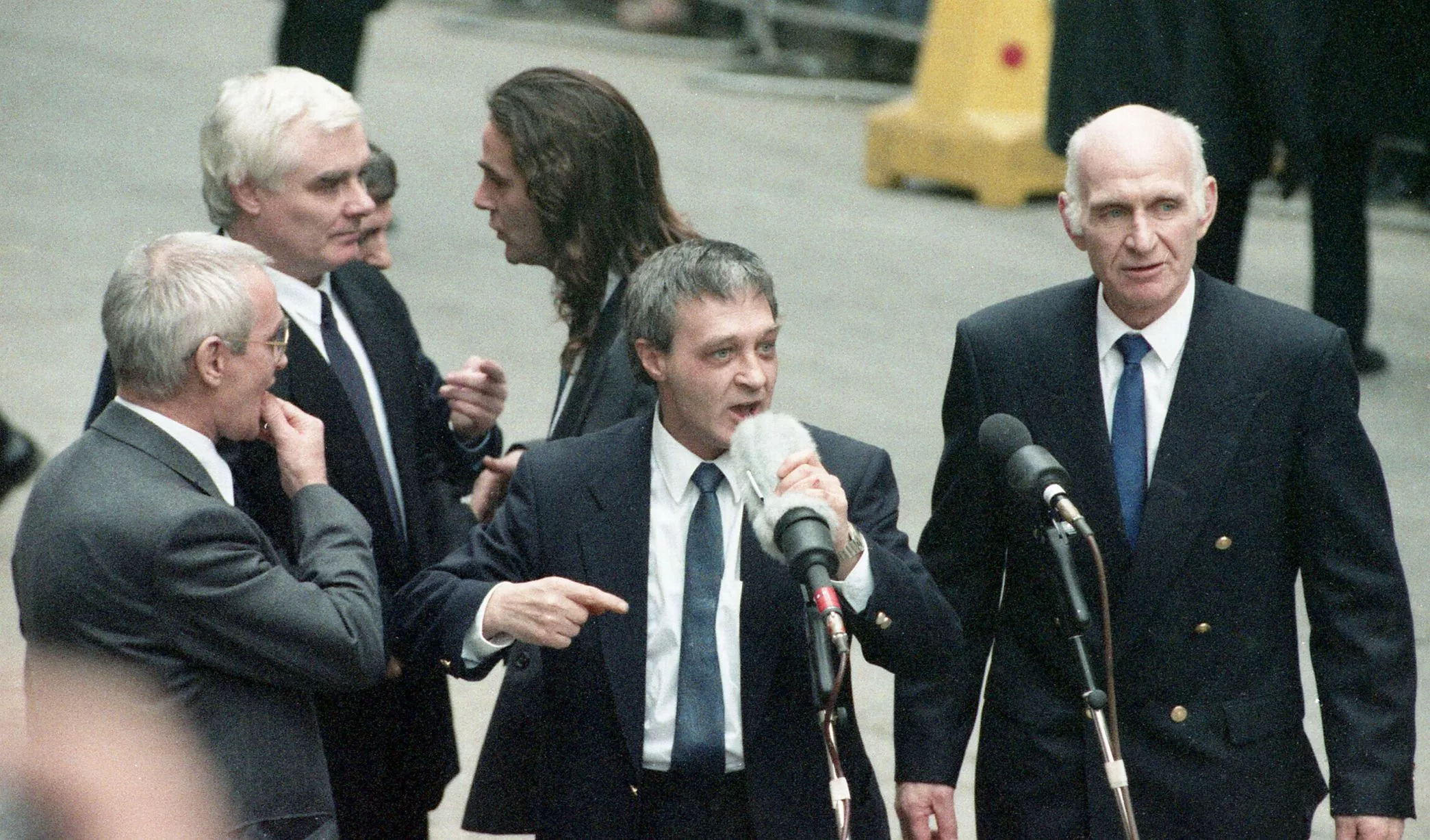
On that cold spring day, the Birmingham Six were finally freed, exonerated after 16 years of being buried alive in British prisons for a crime they did not commit. Six Irishmen — Hugh Callaghan, Patrick Hill, Gerry Hunter, Richard McIlkenny, William Power, and John Walker — emerged from the belly of injustice not as broken men, but as walking indictments against the machinery of the British state.
These men were not just released — they were released screaming, demanding the world pay attention to the rotted soul of a legal system that crushed them for political convenience.
Read also: 14th March 1984 – The Day Sinn Féin Leader Gerry Adams Was Shot and Wounded
Why Were the Birmingham Six Freed?
Because the truth finally tore through the silence.
They were freed because they were innocent, and always had been. The British legal system didn’t discover their innocence — it was dragged kicking and screaming to acknowledge it. What began as a calculated scapegoating of Irish men during the height of anti-Irish sentiment in Britain was eventually unraveled by the dogged work of journalists, campaigners, lawyers, and families who refused to accept the lie.
The Birmingham Six were freed because the forensic evidence was proven fraudulent, the police confessions were exposed as products of torture, and the entire case against them collapsed under the weight of its own manufactured narrative.
Six men. Six ruined lives. Six scapegoats sacrificed to satisfy a public thirst for vengeance after the 1974 Birmingham pub bombings, which killed 21 innocent people and injured over 180.
But the Six had nothing to do with it.
How Were the Birmingham Six Proven Innocent?
They were proven innocent not by the system, but in spite of it.
Years of campaigning, public protests, and relentless journalism slowly picked apart the threads of the case. The forensic evidence — particularly claims that their hands tested positive for explosives — was debunked. Dr. Frank Skuse, the forensic expert whose testimony helped jail them, was discredited when later tests showed the materials could come from common household substances like playing cards or cigarette residue.
But the most damning evidence came from confessions extracted under police brutality. The Six detailed horrific beatings, threats, and psychological torment at the hands of West Midlands Police. Their bruises spoke louder than the statements they were coerced into signing.
Eventually, appeals were heard, and the Court of Appeal admitted the convictions were unsafe and unsound. Justice, though delayed, had no choice but to show its face — shamed and shaking.
What Was the Verdict of the Birmingham 6?
The original verdict in 1975 was guilty on all counts — a decision fueled by media frenzy, prejudice, and the pressure to deliver a quick result to a grieving, outraged public.
But on 14 March 1991, those convictions were quashed by the Court of Appeal. Not only did the court acknowledge that the original verdicts were unsafe, but it also implicitly admitted what campaigners had screamed for years: the Birmingham Six were framed.
When Was Birmingham 6 Released?
March 14th, 1991. Six men walked free into a storm of flashing cameras, tear-soaked embraces, and a country forced to confront a truth it had tried to bury.
Sixteen years. Six thousand days. Gone. Stolen. But not in silence.
Are Any of the Birmingham 6 Still Alive? / Are the Birmingham 6 Still Alive?
As of 2025, some members of the Birmingham Six are still alive, though most have lived reclusive lives since their release. Richard McIlkenny passed away in 2006, and others have aged quietly out of the spotlight. Patrick Hill, one of the most outspoken members, has continued to speak out on injustice and the damage inflicted by the prison system.
If you’re wondering, “Birmingham Six where are they now?”, the answer is simple — they are scattered across the shadows, survivors trying to live in a world that watched them rot for 16 years and did little to stop it.
Patrick Hill Birmingham Six
Patrick Hill was one of the loudest voices of resistance during and after the ordeal. A man who refused to be broken, Hill became a vocal critic of police brutality and miscarriages of justice after his release. His raw, unfiltered interviews gave voice to the rage that the system tried to erase.
To this day, he remains a symbol of the human cost of corruption and institutional cowardice.
Gerry Hunter Birmingham Six
Gerry Hunter, another of the Six, lived through unspeakable abuse inside prison walls, enduring decades of isolation, violence, and systemic degradation. Like the others, Hunter has largely withdrawn from public life, but his name remains etched in the annals of wrongful convictions — a scar on the face of British justice.
Who Was the Judge of the Birmingham 6 Case?
The original trial in 1975 was presided over by Sir Nigel Bridge, a judge whose court was more a theatre of retribution than a sanctuary of truth. The appeal hearings that led to their release were handled by Lord Lane, who had earlier dismissed previous appeals. But ultimately, it was Lord Chief Justice Lane’s successor, Lord Taylor, who finally overturned the convictions in 1991 — though not without pressure from mounting public outrage and irrefutable evidence of injustice.
What Were the Goals of the Birmingham Protest?
The protests weren’t just about six men. They were about a nation waking up to systemic failure. The goal was justice — not just for the Birmingham Six, but for every person whose voice had been drowned in a courtroom echo chamber.
Activists wanted police accountability, reform of the criminal justice system, and recognition of the anti-Irish racism that had infected British institutions during the Troubles. Their cries were not always heard, but they carved cracks into the concrete walls of silence.
Were the Birmingham Six Really Innocent?
Let’s not mince words — yes, they were really innocent. They were Irish. That was their crime. In the Britain of the 1970s, that was enough. They were convicted not on evidence, but on prejudice. And for that, they lost their freedom. Their innocence is no longer up for debate — it is a matter of record, of history, and of shame.
Birmingham Six Case Summary
- Arrested: November 1974
- Charged with: Birmingham pub bombings
- Trial: 1975 – All six convicted
- Evidence: Flawed forensics and coerced confessions
- Campaigns: National and international support grew in the 1980s
- Release: March 14, 1991 – Convictions quashed
- Aftermath: Massive blow to British legal credibility, calls for justice reform
Legacy: A Wound That Never Heals
The Birmingham Six weren’t just victims of wrongful imprisonment — they were symbols of a justice system that had lost its moral compass.
Their story is a warning — one still relevant in our modern world. When institutions serve power instead of truth, innocence is just another casualty.
So ask yourself — how many more walk the corridors of prisons today, sentenced not by evidence, but by prejudice?
Because the fight for justice is never over. And history, if it dares to repeat itself, must hear our voices louder than before.
About the Author
