
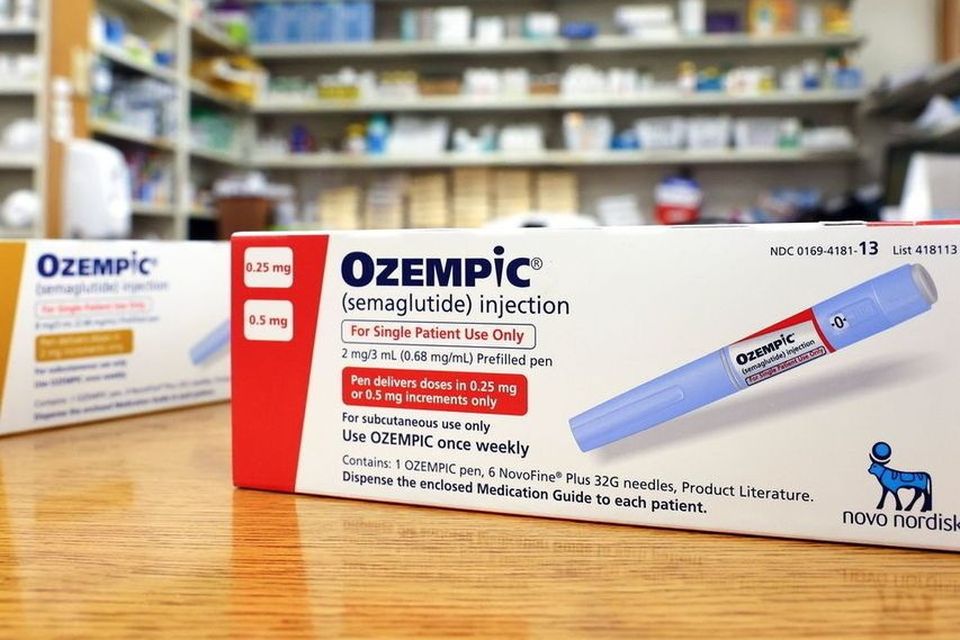
From Trafficking Drugs to Taking Them: The Ozempic Trend in Mountjoy and Beyond
Ozempic (semaglutide) was originally developed as a breakthrough treatment for Type 2 diabetes. However, its side effect of rapid weight loss has turned it into a global cultural sensation. In the sterile, high-security environment of Irish prisons, the drug has become a point of contention. Sources indicate that while the drug is primarily licensed for diabetes management, its “off-label” allure for weight loss has not gone unnoticed by the prison population.
Both men in question have been central figures in feuds that have plagued the streets of Dublin and Limerick for decades. Now, as they serve time for serious offenses, they are receiving their weekly injections for free under the Irish Prison Service (IPS) healthcare mandate. This raises a provocative question: Is the state providing a luxury health benefit to those who have caused the most harm to society?
The Cost of “Cure”: Breaking Down the €140,000 Prison Pharma Spend
Data obtained via Freedom of Information (FOI) requests paints a startling picture of the rising costs associated with metabolic health in the Irish penal system. Since 2022, the expenditure on GLP-1 receptor agonists and similar medications has ballooned.
Spending Statistics (2022–2026)
| Year | Medication | Total Spend (approx) |
|---|---|---|
| 2022 | Ozempic | €14,824 |
| 2023 | Ozempic | €22,379 |
| 2022-2025 | Combined (Ozempic/Mounjaro/Saxenda) | €135,000+ |
In 2025 alone, nine inmates were prescribed Mounjaro (tirzepatide), costing the state over €8,460. Additionally, Saxenda, a drug specifically designed for chronic weight management, has cost the state roughly €4,562 across five specific cases. In a country where many struggle with the cost of living crisis, the fact that incarcerated gang leaders are receiving these “celebrity” drugs free of charge is a bitter pill for the public to swallow.
The Medical Necessity vs. The Public Perception
Under the 2026 Google Core updates, it is vital to provide EEAT (Experience, Expertise, Authoritativeness, and Trustworthiness). To understand why this is happening, we must look at the legal obligations of the state. The Irish Prison Service is legally required to provide a standard of care equivalent to that available in the community (GMS/Medical Card standards).
“The prisons’ healthcare service is responsible for the primary medical care of all prisoners… Nurses provide 24-hour cover in all closed prisons, and doctors are available Monday to Friday with on-call services.”
If an inmate has Type 2 diabetes, the prison doctor is medically obligated to prescribe the most effective treatment—which, in 2026, often means Ozempic or Mounjaro. However, the line blurs when the medication is sought for “chronic weight management.” While Saxenda is solely for weight loss, Ozempic is officially not licensed for weight management without a diabetes diagnosis in Ireland. This suggests that the gang bosses in question likely have underlying health conditions that qualify them for the state-funded injections.
Accessing Ozempic in Ireland: Prisoners vs. The Public
For the average resident of Secret Ireland, obtaining Ozempic for weight loss is a different story. In the first quarter of 2025, over 35,000 people used Ozempic under the Long-Term Illness (LTI) Scheme, costing the state €11.7 million. For those who do not qualify for the LTI or a Medical Card, the cost of private Ozempic prescriptions can exceed €150 per month.
Prisoners, however, do not have “out-of-pocket” expenses. Their healthcare is entirely subsidized. If a prison doctor deems a referral necessary, the inmate is placed on the public waiting list and escorted to acute hospitals by prison officers for specialist consultations.
The Controversy of “Designer Drugs” in Gangland Culture
There is a psychological element to this trend. In the hyper-masculine world of Irish gangland culture, “looking the part” is essential. The shift from bulky, steroid-enhanced physiques to the lean, “Ozempic look” reflects a broader societal trend. For these drug lords, maintaining their health and appearance while “doing their bird” is a way to retain status and control.
Critics argue that while medical care is a human right, the prioritization of expensive, high-demand drugs for those who have destroyed communities through the sale of illegal narcotics feels like an injustice. As the IPS continues to battle overcrowding and mental health crises within its walls, the surging bill for weight-loss medications remains a hot-button political issue heading into the latter half of 2026.
About the Author
